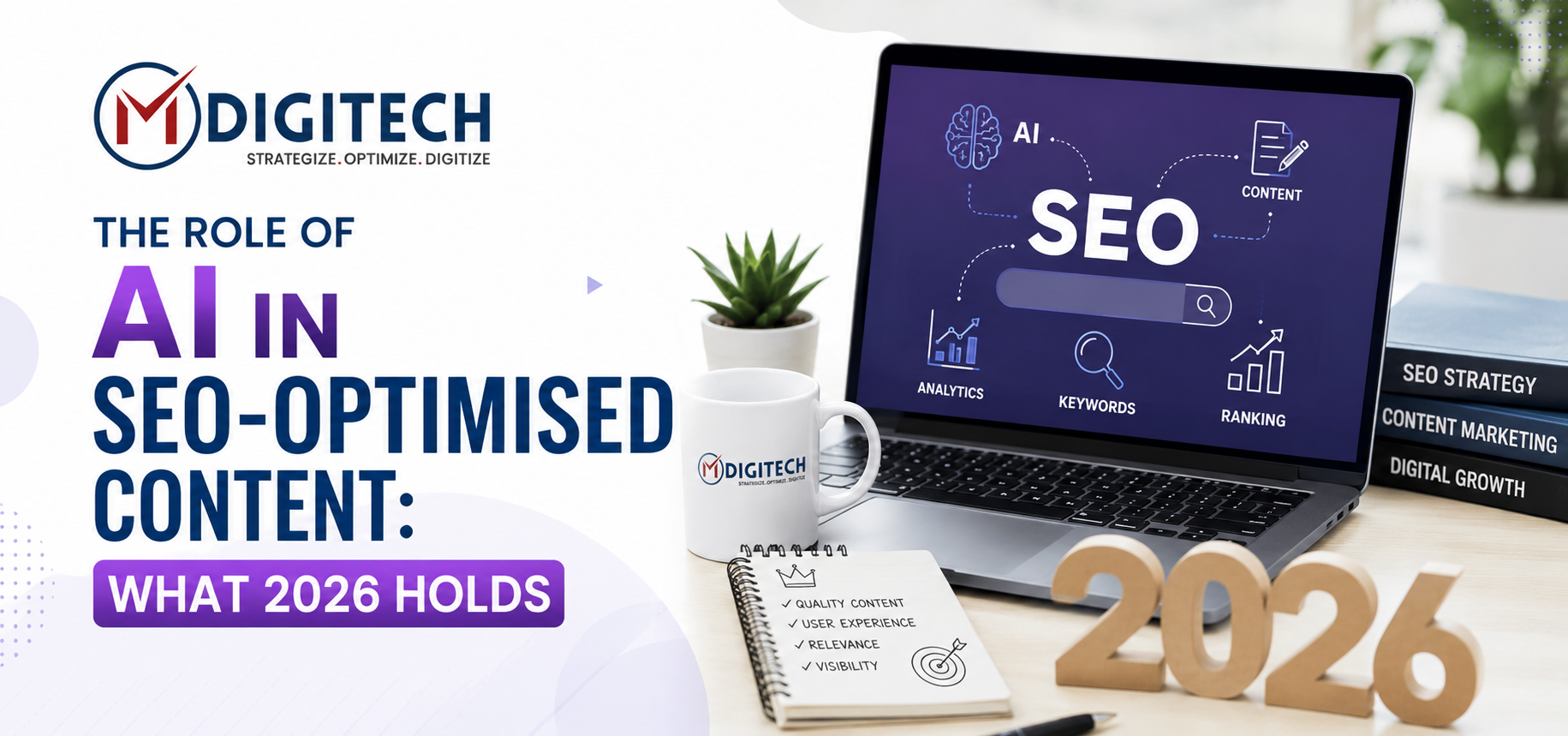
Search optimization continues to evolve as user expectations, search behavior, and digital platforms become more sophisticated. Artificial intelligence now influences how marketers research topics, create content, evaluate performance, and improve visibility. Rather than acting as a replacement for human expertise, AI strengthens efficiency and supports better decision-making. As 2026 approaches, businesses that combine strategic thinking with intelligent technology will gain stronger visibility, better engagement, and improved content performance across competitive digital environments.
Why AI Is Reshaping SEO Content Creation
Content creation has always required research, planning, optimization, and continuous improvement. However, modern search environments demand greater accuracy, relevance, and user satisfaction than ever before.
Artificial intelligence helps content teams:
- Process large amounts of data quickly
- Identify emerging search trends
- Analyze audience behavior
- Improve content structure
- Support keyword research
- Enhance content relevance
- Streamline optimization workflows
Consequently, teams can produce higher-quality content while reducing time spent on repetitive tasks.
The Shift From Manual Research to Intelligent Analysis
Traditional content research often required hours of manual investigation. AI-powered systems now evaluate search patterns, user interests, and content opportunities within minutes.
Moreover, these tools reveal insights that might remain hidden through manual analysis alone. As a result, marketers can make more informed decisions before creating content.
Faster Access to Actionable Insights
Content teams often struggle with information overload. Intelligent systems organize large datasets into practical recommendations.
Therefore, marketers can focus on strategy rather than spending excessive time gathering information from multiple sources.
The Growing Importance of Search Intent
Search engines increasingly prioritize user satisfaction. Consequently, successful content must align closely with user intent.
Understanding Different Search Behaviors
Users perform searches for various reasons, including:
- Finding information
- Comparing solutions
- Making purchases
- Solving problems
- Evaluating options
- Accessing specific resources
AI helps marketers identify these motivations more accurately.
Moreover, content creators can match their messaging to specific audience needs, improving engagement and visibility.
Improving Relevance Through Intent Analysis
Search intent analysis allows teams to create content that answers real questions rather than simply targeting keywords.
As a result, pages often achieve stronger engagement signals, longer visit durations, and improved search performance.
Content Planning Becomes More Strategic
Successful content begins with effective planning. AI contributes significantly to this process by identifying opportunities and prioritizing topics.
Topic Opportunity Identification
Advanced systems analyze:
- Audience interests
- Competitive gaps
- Search demand
- Seasonal patterns
- Emerging discussions
Consequently, teams can build content calendars based on measurable opportunities instead of assumptions.
Content Gap Analysis
Gap analysis helps organizations identify areas where competitors provide stronger coverage.
Moreover, AI can highlight subjects that audiences seek but existing content fails to address effectively.
This capability supports more strategic content development and stronger long-term visibility.
Keyword Research Evolves Beyond Traditional Methods
Keyword research remains important, yet modern optimization extends far beyond isolated phrases.
Semantic Search Opportunities
Search engines now evaluate relationships between topics, concepts, and entities.
Therefore, content creators must address broader subject areas rather than repeating specific keywords excessively.
Benefits include:
- Greater topical authority
- Improved contextual relevance
- Better user satisfaction
- Increased ranking opportunities
Context-Driven Optimization
Context has become as important as keyword selection.
AI systems evaluate how terms relate to broader discussions and audience expectations. Consequently, marketers can create more natural and informative content experiences.
The Rise of Content Personalization
Personalized experiences continue to influence digital success.
Dynamic Content Experiences
Modern AI systems adjust content based on factors such as:
- User interests
- Geographic location
- Browsing behavior
- Device preferences
- Engagement history
As a result, visitors receive information that feels more relevant and valuable.
Audience-Centered Optimization
Content strategies increasingly focus on individual needs rather than broad audience categories.
Consequently, organizations can improve engagement while strengthening relationships with their target audiences.
AI and Content Quality Standards
Quality remains a fundamental ranking factor. Search engines prioritize useful, accurate, and trustworthy content.
Improving Readability
AI tools evaluate:
- Sentence structure
- Content flow
- Clarity
- Reading difficulty
- Formatting quality
Therefore, teams can improve accessibility without sacrificing depth or professionalism.
Maintaining Consistency
Large content operations often struggle with consistency.
Intelligent systems help maintain:
- Brand voice
- Writing style
- Terminology usage
- Structural standards
As a result, content quality remains stable across multiple channels and contributors.
The Expanding Role of Data in Content Decisions
Data-driven decisions have become essential for effective optimization.
Performance Monitoring
AI platforms monitor:
- Traffic trends
- Engagement metrics
- User interactions
- Conversion patterns
- Ranking changes
Consequently, marketers can identify opportunities for improvement more quickly.
Predictive Insights
Predictive models estimate future outcomes based on existing performance data.
Moreover, these insights help teams allocate resources more effectively and prioritize high-potential initiatives.
Automation Without Losing Human Value
Automation continues to expand across digital marketing functions.
Tasks Suitable for Automation
AI can efficiently support:
- Research organization
- Content outlines
- Metadata creation
- Performance reporting
- Optimization recommendations
Consequently, teams gain additional time for creative and strategic activities.
The Human Element Remains Essential
Although automation improves efficiency, human expertise remains critical.
Professionals continue to provide:
- Strategic direction
- Editorial judgment
- Creativity
- Brand positioning
- Emotional intelligence
Therefore, the strongest results emerge when technology and human skills work together.
How Search Engines Evaluate Content in 2026
Search engines increasingly assess overall content value rather than isolated ranking signals.
User Experience Signals
Several factors influence visibility:
- Engagement quality
- Content usefulness
- Navigation simplicity
- Mobile performance
- Information accuracy
As a result, optimization requires a broader perspective than keyword placement alone.
Authority and Trust
Content must demonstrate expertise and reliability.
Moreover, search systems continue refining methods for evaluating credibility across digital platforms.
Visual Content and AI Integration
Visual elements play an increasingly important role in content strategies.
Enhanced Media Optimization
AI helps improve:
- Image organization
- Accessibility elements
- Visual relevance
- Content alignment
Consequently, visual assets contribute more effectively to search performance.
Improving User Engagement
High-quality visuals often increase engagement levels.
Therefore, content teams increasingly integrate images, graphics, and multimedia elements into broader optimization strategies.
Voice Search Influences Content Development
Voice-enabled technologies continue to shape search behavior.
Conversational Search Patterns
Voice searches frequently use:
- Natural language
- Complete questions
- Contextual requests
- Conversational phrasing
As a result, content creators increasingly focus on direct and clear responses.
Optimizing for Spoken Queries
Content that addresses real-world questions often performs well within conversational search environments.
Consequently, marketers must consider how audiences naturally communicate rather than relying solely on traditional keyword patterns.
The Future of Content Research
Research processes continue evolving through intelligent analysis tools.
Real-Time Trend Identification
AI platforms detect shifts in audience interests rapidly.
Benefits include:
- Faster content planning
- Earlier trend adoption
- Better audience alignment
- Increased relevance
Competitive Intelligence
Organizations can analyze competitor performance more effectively.
Moreover, intelligent systems identify strengths, weaknesses, and opportunities that support stronger strategic decisions.
Ethical Considerations in AI-Powered Content
As AI adoption increases, ethical responsibility becomes increasingly important.
Accuracy and Transparency
Content teams must ensure:
- Factual accuracy
- Clear communication
- Responsible content practices
- Reliable information quality
Consequently, trust remains a central priority.
Balancing Efficiency and Authenticity
Organizations should avoid prioritizing automation over quality.
Instead, successful strategies combine efficiency with meaningful audience value and authentic communication.
The Business Impact of Smarter Content Operations
Organizations increasingly seek measurable returns from content investments.
Operational Benefits
AI-driven workflows can improve:
- Productivity
- Content consistency
- Resource allocation
- Campaign efficiency
- Performance tracking
As a result, teams can scale content efforts more effectively.
Long-Term Competitive Advantages
Businesses that adopt intelligent content processes strategically often gain advantages through:
- Better visibility
- Faster execution
- Stronger audience engagement
- Improved decision-making
Consequently, content becomes a more powerful driver of business growth.
Preparing for the Next Phase of SEO
The relationship between content and technology will continue evolving throughout 2026.
The influence of AI in SEO will become increasingly visible as organizations seek greater efficiency, stronger personalization, and deeper audience insights. However, successful optimization will still depend on quality content, strategic planning, and genuine audience value.
Businesses that balance innovation with thoughtful execution will remain well-positioned for sustainable digital growth.
FAQs
1. How does AI help improve SEO content?
AI helps analyze search trends, user behavior, content opportunities, and performance metrics. Consequently, marketers can create more relevant content, improve optimization strategies, and make faster decisions based on meaningful data rather than assumptions.
2. Will AI replace human content creators?
No. AI supports efficiency and analysis, but human professionals provide creativity, strategic thinking, emotional intelligence, and editorial judgment. The strongest content strategies combine technological capabilities with human expertise.
3. Why is search intent important in 2026?
Search engines increasingly prioritize user satisfaction. Therefore, content that aligns closely with audience intent often achieves stronger engagement, better visibility, and improved performance compared to content focused only on keywords.
4. Can AI improve keyword research?
Yes. AI identifies semantic relationships, contextual relevance, audience interests, and emerging opportunities. As a result, marketers can build broader content strategies that address entire topics instead of isolated keyword targets.
5. How does personalization affect SEO performance?
Personalized experiences improve relevance and engagement. Consequently, users interact more positively with content, which can contribute to stronger performance signals and better overall digital experiences.
6. What role does predictive analytics play in content marketing?
Predictive analytics estimates future outcomes using existing data. Therefore, marketers can prioritize opportunities, forecast performance, and allocate resources more effectively while reducing uncertainty.
7. Is automation beneficial for SEO workflows?
Automation improves efficiency by handling repetitive tasks such as reporting, research organization, and metadata generation. However, human oversight remains essential for maintaining quality and strategic direction.
8. How does voice search influence content creation?
Voice search encourages conversational content structures and direct answers. As a result, marketers increasingly focus on natural language patterns and question-based content formats.
9. What challenges come with AI-powered content creation?
Challenges include maintaining accuracy, preserving authenticity, ensuring quality control, and avoiding overreliance on automation. Organizations must balance efficiency with meaningful audience value.
10. What should businesses focus on for SEO success in 2026?
Businesses should prioritize quality content, audience relevance, personalization, strong user experiences, ethical practices, and intelligent use of technology. Together, these factors support stronger visibility and sustainable growth.
Conclusion
Artificial intelligence continues to transform how organizations plan, create, optimize, and evaluate digital content. While technology enhances efficiency and insight generation, successful SEO strategies still rely on relevance, quality, and audience value. As 2026 unfolds, businesses that combine intelligent automation with strong human judgment will achieve stronger visibility, deeper engagement, and more sustainable search performance in an increasingly competitive digital landscape.