How to Evaluate Digital Marketing Service Providers
Choosing a digital marketing partner can shape the trajectory of a business. A strong provider accelerates growth, improves efficiency, and builds long-term brand value. The best digital marketing agency often stands out through strategy and execution, but identifying the right fit requires careful evaluation.
Many businesses make decisions based on pricing or promises alone. That approach leads to mismatched expectations and poor outcomes. A structured evaluation process helps filter out noise and focus on what truly matters—performance, transparency, and alignment.
Start with Clear Business Objectives
Before evaluating any provider, define what success looks like. Without clear goals, even the most skilled agency will struggle to deliver meaningful results.
Ask these questions internally:
- Do you want to increase traffic, leads, or sales?
- Are you focusing on short-term revenue or long-term growth?
- Which channels matter most to your audience?
Clarity at this stage ensures that every conversation with a provider stays focused and productive.
Assess Strategic Thinking, Not Just Execution
Execution matters, but strategy drives results. A provider must demonstrate the ability to think beyond tasks and align marketing efforts with business goals.
Look for:
- A clear roadmap tailored to your business
- Audience segmentation and targeting logic
- Channel selection based on data, not trends
- Measurable milestones
A strong strategy separates serious professionals from generic service providers.
Evaluate Experience Through Results, Not Claims
Many providers highlight years of experience, but experience alone does not guarantee performance. Focus on outcomes.
Key indicators include:
- Case studies with measurable results
- Before-and-after performance metrics
- Examples of scaling campaigns
- Evidence of problem-solving in challenging scenarios
Real results provide more insight than polished presentations.
Transparency in Communication
Transparency builds trust and ensures accountability. A reliable provider communicates openly about performance, challenges, and expectations.
Check for:
- Clear reporting structures
- Regular updates on campaign performance
- Honest discussions about limitations
- Willingness to explain strategies in detail
Avoid providers who rely on vague language or avoid data-driven conversations.
Understand Their Approach to Data
Data drives modern marketing decisions. A capable provider uses analytics to guide every step.
Important aspects include:
- Tracking key performance indicators (KPIs)
- Using data to refine campaigns
- Providing actionable insights, not just numbers
- Aligning metrics with business goals
Data should inform decisions, not just fill reports.
Review Their Service Scope
Different providers offer different capabilities. Some specialize in specific channels, while others provide full-service solutions.
Common service areas:
- Search engine optimization (SEO)
- Paid advertising
- Content marketing
- Social media management
- Email marketing
- Conversion rate optimization
Choose a provider whose services align with your needs. Avoid paying for services that do not contribute to your goals.
Check Adaptability and Flexibility
Markets change quickly. A provider must adapt strategies based on performance and external factors.
Evaluate whether they:
- Adjust campaigns based on data
- Test new approaches regularly
- Respond quickly to changes in trends or algorithms
- Customize strategies instead of using templates
Flexibility ensures long-term success.
Analyze Reporting and Metrics
Reports should provide clarity, not confusion. They must highlight progress and areas for improvement.
A strong reporting system includes:
- Clear breakdown of metrics
- Visual representation of performance
- Insights into what drives results
- Recommendations for next steps
Avoid reports filled with vanity metrics that do not impact business outcomes.
Evaluate Communication Style
Communication impacts collaboration. A provider must maintain clarity, consistency, and responsiveness.
Consider:
- Response time to queries
- Ability to explain complex concepts simply
- Regular check-ins or meetings
- Proactive updates
Good communication prevents misunderstandings and keeps projects on track.
Pricing vs Value
Cost matters, but value matters more. The cheapest option often leads to poor results, while the most expensive option does not guarantee success.
Focus on:
- Return on investment (ROI)
- Alignment between pricing and deliverables
- Transparency in billing
- Flexibility in scaling services
A balanced approach ensures sustainable investment.
Look at Technology and Tools
The right tools enhance efficiency and accuracy. Providers should use advanced platforms for analytics, automation, and campaign management.
Important tool categories:
- Analytics platforms
- SEO research tools
- Advertising management systems
- Automation tools
Technology supports better execution and faster optimization.
Evaluate Their Creative Capabilities
Creative elements influence engagement and conversions. A provider must combine strategy with creativity.
Assess:
- Quality of ad creatives
- Content style and tone
- Visual consistency
- Ability to adapt messaging for different audiences
Strong creative work enhances campaign performance.
Consider Industry Knowledge
While general expertise matters, familiarity with your industry can provide an advantage.
Benefits include:
- Faster understanding of target audience
- Better keyword and content strategies
- Awareness of industry trends
- Ability to anticipate challenges
Industry knowledge improves efficiency and relevance.
Test with a Pilot Project
Before committing to a long-term partnership, consider starting with a smaller project.
Advantages of a pilot approach:
- Evaluate real performance
- Assess communication and workflow
- Identify strengths and weaknesses
- Reduce risk
A trial period provides valuable insights without long-term commitment.
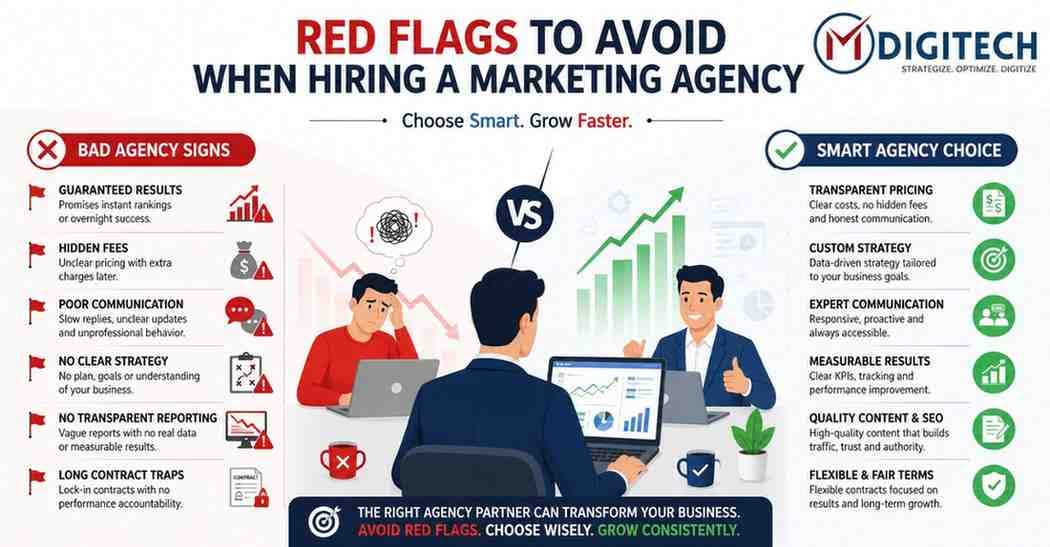
Red Flags to Watch For
Not every provider delivers on promises. Recognizing warning signs helps avoid costly mistakes.
Common red flags:
- Guaranteed results without data
- Lack of transparency in reporting
- Overemphasis on vanity metrics
- Poor communication
- Generic, one-size-fits-all strategies
These signs indicate potential issues.
Importance of Cultural Fit
Collaboration works best when both sides align in values and expectations.
Consider:
- Work style compatibility
- Shared goals and vision
- Professionalism in interactions
- Openness to feedback
A strong cultural fit improves long-term collaboration.
Long-Term Partnership Potential
Digital marketing is not a one-time effort. It requires ongoing optimization and adaptation.
Evaluate whether the provider:
- Focuses on sustainable growth
- Builds scalable systems
- Invests in continuous improvement
- Maintains consistency in performance
A long-term mindset ensures stability and progress.
Balancing Control and Collaboration
Businesses must decide how much control they want to retain. Some prefer full-service management, while others want partial involvement.
Define:
- Roles and responsibilities
- Level of involvement in decision-making
- Approval processes for campaigns
- Access to data and accounts
Clear boundaries prevent conflicts.
Conclusion
Evaluating digital marketing service providers requires a structured approach that goes beyond surface-level impressions. Businesses must focus on strategy, performance, transparency, and alignment with goals. The right provider acts as a growth partner, not just a service vendor.
By analyzing experience, communication, data usage, and adaptability, businesses can make informed decisions that support long-term success. Careful evaluation reduces risk and ensures that marketing efforts contribute meaningfully to growth.