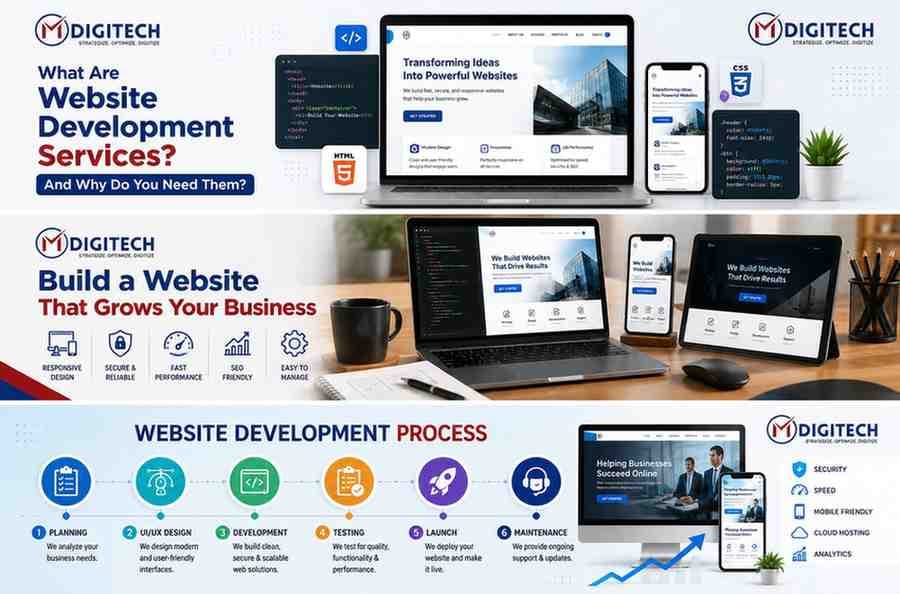
Website development plays a central role in building a strong online presence. A professionally developed website does far more than display information. It supports marketing goals, builds trust, improves customer experiences, and creates opportunities for steady business growth. Whether a company serves local customers or reaches global audiences, a well-developed website forms the foundation of every digital strategy. Moreover, professional development services help businesses create secure, scalable, and user-focused websites that perform consistently while adapting to changing customer expectations.
What Are Website Development Services?
A website serves as a digital storefront, communication platform, and sales channel at the same time. Website development services involve planning, designing, building, testing, launching, and maintaining websites that align with specific business goals. Instead of creating pages that simply look attractive, developers focus on functionality, performance, security, usability, and scalability.
Professional website development combines technical knowledge with strategic planning. Consequently, every feature supports a meaningful purpose, whether it encourages visitors to contact the business, complete purchases, book appointments, or request estimates.
Development services often include collaboration between designers, developers, content specialists, and quality assurance professionals. Each contributes specialized expertise that improves the finished product. Moreover, this collaborative approach ensures every component works together without compromising speed or user experience.
Businesses also benefit from customized development strategies rather than one-size-fits-all solutions. Different industries require different website features, user journeys, and technical capabilities. Therefore, experienced developers create solutions based on business objectives instead of relying entirely on generic templates.
Core Components of Website Development Services
A successful website depends on multiple technical and creative elements working together. Each component contributes to overall performance and customer satisfaction.
Website Planning and Strategy
Every successful project begins with careful planning. Developers identify business objectives, target audiences, required functionality, website structure, and long-term growth expectations before writing code.
Proper planning reduces costly revisions later. Furthermore, it creates a roadmap that keeps every stage aligned with business priorities.
Typical planning activities include:
- Business requirement analysis
- Audience research
- Website architecture
- Feature prioritization
- Technical planning
- Content organization
- User journey mapping
Custom Website Design
Visual appearance shapes first impressions within seconds. However, design involves much more than attractive graphics.
Professional designers focus on:
- Clear navigation
- Consistent branding
- Readable typography
- Balanced layouts
- Effective spacing
- Strong visual hierarchy
- Accessible interfaces
Consequently, visitors find information quickly without feeling overwhelmed.
Front-End Development
Front-end development transforms design concepts into interactive web pages.
Developers build interfaces using modern programming languages and frameworks that deliver responsive layouts across desktops, tablets, and smartphones.
Important front-end priorities include:
- Fast loading pages
- Smooth animations
- Mobile responsiveness
- Interactive forms
- User-friendly navigation
- Browser compatibility
Moreover, responsive development improves customer satisfaction because users expect consistent experiences regardless of device.
Back-End Development
The back end powers everything visitors cannot see.
Developers create systems that manage databases, user accounts, product inventories, customer information, payment processing, and website administration.
Reliable back-end development ensures:
- Stable performance
- Secure data handling
- Efficient processing
- Scalable infrastructure
- Easy administration
- System integration
As businesses grow, strong back-end architecture supports increasing traffic without sacrificing reliability.
Why Professional Website Development Matters
Many businesses initially assume any website can generate results. However, poor development often creates long-term challenges that affect credibility, search visibility, and customer confidence.
Professional development produces measurable advantages beyond appearance alone.
Creates a Strong First Impression
Visitors evaluate businesses quickly. An outdated, slow, or confusing website often causes potential customers to leave before exploring products or services.
Conversely, modern layouts, intuitive navigation, and polished visuals encourage visitors to remain engaged.
Positive first impressions increase opportunities for:
- Lead generation
- Sales
- Appointment requests
- Newsletter subscriptions
- Customer inquiries
Improves User Experience
User experience influences every interaction.
Visitors expect websites that load quickly, display properly on every device, and provide simple navigation.
Professional developers reduce unnecessary friction by improving page organization, optimizing navigation menus, simplifying forms, and creating logical content structures.
Furthermore, improved usability often leads to higher conversion rates because customers complete desired actions with less effort.
Supports Business Credibility
Trust remains one of the strongest factors influencing online decisions.
Professional websites communicate reliability through consistent branding, secure browsing, organized content, and polished functionality.
Customers naturally associate website quality with business quality. Therefore, investing in professional development strengthens credibility before direct conversations even begin.
Security features, updated software, accurate contact information, and professional visuals reinforce customer confidence throughout every interaction.
Essential Features Every Business Website Should Include
Modern websites require more than attractive layouts. They need practical features that improve usability while supporting business goals.
Important features include:
- Mobile-friendly responsive design
- Fast page loading
- Secure HTTPS encryption
- Clear navigation menus
- Contact forms
- Click-to-call functionality
- Search capability
- Accessible design standards
- High-quality images
- Optimized code
- Easy content management
- Strong internal linking
- Clear calls to action
- Social media integration
- Analytics tracking
Each feature contributes to a better visitor experience while supporting long-term performance.
The Role of Website Performance
Website speed directly affects visitor satisfaction.
Even small delays increase bounce rates because users expect immediate access to information. Consequently, developers optimize every technical element to improve loading times.
Performance optimization may include:
Image Optimization
Large image files slow websites significantly.
Developers compress images without sacrificing quality, allowing pages to load faster while maintaining visual appeal.
Efficient Coding
Clean code reduces unnecessary processing.
Well-organized programming improves maintainability, decreases loading times, and minimizes technical errors.
Reliable Hosting Integration
Even excellent development cannot compensate for poor hosting.
Professional developers recommend hosting environments capable of supporting website traffic, security, and future growth.
Moreover, reliable hosting improves uptime, ensuring customers can access the website whenever needed.
Website Security Should Never Be an Afterthought
Cybersecurity affects businesses of every size.
Websites store valuable information, making them attractive targets for automated attacks and malicious activity. Therefore, professional development includes multiple security layers that reduce vulnerabilities.
Important security measures include:
- SSL certificates
- Secure authentication
- Regular software updates
- Malware protection
- Firewall configuration
- Database security
- Backup systems
- Spam prevention
- Secure payment processing where applicable
Strong security protects customer information while reducing operational risks.
Website Development vs. Website Design
Many people use website development and website design interchangeably, yet they serve different purposes. Website design focuses on visual appearance, branding, color schemes, typography, and page layouts. Development transforms those creative concepts into a fully functional website using programming languages, frameworks, and databases.
Design determines how visitors perceive the website, while development determines how it performs. Consequently, both disciplines must work together to deliver an engaging experience. A visually impressive website with poor functionality frustrates users, whereas an efficient website with weak design may fail to capture attention. Combining thoughtful design with reliable development creates a balanced solution that supports business objectives and customer expectations.
Custom Websites vs. Template-Based Websites
Businesses often choose between custom development and template-based solutions. Each option offers distinct advantages depending on budget, functionality, and growth plans.
Custom Website Development
Custom websites provide flexibility because developers build every feature around specific business needs.
Benefits include:
- Unique branding
- Greater scalability
- Advanced functionality
- Better performance optimization
- Easier system integration
- Improved long-term adaptability
Although custom development requires a larger initial investment, it often delivers greater value as business requirements evolve.
Template-Based Websites
Templates provide a faster launch and lower upfront costs.
Advantages include:
- Shorter development timelines
- Lower initial expenses
- Simple content management
- Suitable for smaller projects
However, templates may restrict customization, performance optimization, and future expansion. Therefore, businesses expecting steady growth often benefit from investing in custom solutions.
How Website Development Supports Search Visibility
Search engines evaluate websites based on technical quality as well as content. Professional development strengthens several factors that influence visibility.
Developers improve page speed, mobile responsiveness, structured navigation, internal linking, secure connections, and clean coding practices. Moreover, properly organized websites help search engines crawl and index content more efficiently.
Technical improvements also enhance user experience, which supports stronger engagement metrics. Visitors remain longer, view additional pages, and interact with valuable content when websites perform smoothly. Consequently, these positive signals contribute to stronger search performance over time.
Although content remains essential, technical excellence provides the foundation that allows optimization efforts to deliver meaningful results.
Website Maintenance Is an Ongoing Investment
Launching a website marks the beginning rather than the end of development.
Technology changes continuously, and websites require regular attention to remain secure, functional, and competitive. Ongoing maintenance prevents minor issues from becoming costly problems.
Typical maintenance tasks include:
- Software updates
- Security monitoring
- Performance testing
- Broken link repairs
- Content updates
- Database optimization
- Backup verification
- Compatibility testing
- Error monitoring
Regular maintenance also supports customer confidence because visitors expect websites to function properly during every interaction.
Common Website Development Mistakes to Avoid
Many businesses unintentionally reduce website effectiveness by overlooking important development principles.
Common mistakes include:
- Ignoring mobile responsiveness
- Using oversized images
- Creating confusing navigation
- Neglecting website security
- Publishing thin or outdated content
- Overloading pages with unnecessary features
- Forgetting accessibility standards
- Failing to monitor performance
- Using weak calls to action
- Delaying software updates
Avoiding these mistakes protects both customer experience and long-term business performance.
Choosing the Right Website Development Service
Selecting a development partner requires careful evaluation rather than focusing solely on price.
Consider these factors before making a decision:
Technical Expertise
Review technical capabilities, development processes, and the ability to build solutions that match business requirements.
Communication
Clear communication keeps projects organized and reduces misunderstandings throughout development.
Scalability
Choose services that accommodate future expansion instead of limiting growth opportunities.
Security Standards
Ask about security practices, update procedures, and data protection measures.
Support After Launch
Reliable post-launch support ensures technical issues receive prompt attention while keeping the website operating efficiently.
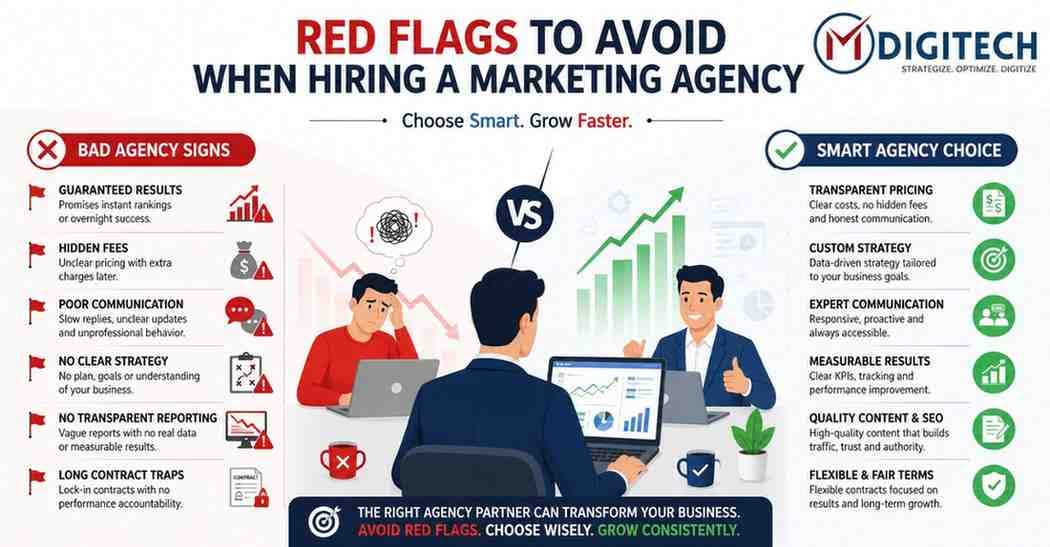
Many businesses also work with a top digital marketing agency to align website development with broader marketing objectives, ensuring the website supports search visibility, lead generation, and customer engagement from the start.
Future-Proofing Your Website
Customer expectations, technology, and search algorithms continue to change. Therefore, websites should remain flexible enough to accommodate future improvements without requiring complete redevelopment.
Future-ready websites emphasize:
- Modular architecture
- Responsive frameworks
- Secure coding standards
- Scalable databases
- Flexible content management
- Performance optimization
- Accessibility compliance
- Integration capabilities
Planning for future growth reduces redevelopment costs while extending the website’s lifespan.
Conclusion
Professional website development delivers far more than an attractive online presence. It creates a secure, fast, scalable, and user-focused platform that supports business goals while building customer trust. Moreover, thoughtful planning, reliable performance, and ongoing maintenance allow websites to remain valuable assets that generate meaningful results for years to come.
Frequently Asked Questions
1. What do website development services include?
Website development services include planning, interface creation, front-end and back-end development, database integration, responsive functionality, testing, deployment, security implementation, performance optimization, and ongoing maintenance. These services work together to create a website that functions efficiently while supporting business goals and providing visitors with a seamless experience.
2. Why is professional website development important?
Professional website development improves security, speed, usability, reliability, and scalability. It also creates positive first impressions, supports customer trust, reduces technical issues, and provides a strong foundation for marketing efforts. A professionally developed website performs consistently while adapting to changing business requirements.
3. How long does website development usually take?
Development timelines depend on project complexity, required features, content preparation, and revisions. Simple websites may require several weeks, while larger custom projects often take several months. Careful planning, clear communication, and organized workflows help keep projects moving efficiently from concept to launch.
4. What is the difference between web design and web development?
Web design focuses on appearance, branding, layouts, colors, and user interface elements. Web development builds the technical functionality that powers those designs. Both disciplines work together to produce websites that look appealing, perform reliably, and provide visitors with smooth, intuitive interactions.
5. Can a business update its website after launch?
Yes. Most professionally developed websites use content management systems that allow authorized users to update text, images, blogs, and certain page elements. More advanced technical modifications may require developer assistance, depending on the website’s structure and customized functionality.
6. Why is mobile responsiveness necessary?
Most visitors browse websites using smartphones and tablets. Responsive websites automatically adjust layouts, images, and navigation for different screen sizes. This improves usability, reduces frustration, supports search visibility, and increases the likelihood that visitors complete desired actions without unnecessary obstacles.
7. How does website speed affect business performance?
Fast-loading websites improve user satisfaction, encourage longer visits, reduce bounce rates, and increase conversions. Slow websites often cause visitors to leave before viewing products or contacting the business. Performance optimization therefore supports both customer experience and long-term growth objectives.
8. How often should a website receive maintenance?
Routine maintenance should occur throughout the year. Regular updates, security monitoring, backups, performance testing, and content reviews help prevent technical problems while keeping the website secure, functional, and compatible with evolving technologies and browser updates.
9. Is custom website development worth the investment?
Custom development provides flexibility, stronger branding, improved scalability, and features tailored to business requirements. Although initial costs may exceed template solutions, custom websites often deliver greater long-term value by supporting growth, improving performance, and reducing future limitations.
10. How can businesses choose the right website development provider?
Businesses should evaluate technical expertise, communication practices, project management processes, security standards, maintenance services, scalability, and previous work. Selecting a provider that aligns with business objectives helps create a website capable of supporting long-term success and delivering consistent value to customers.