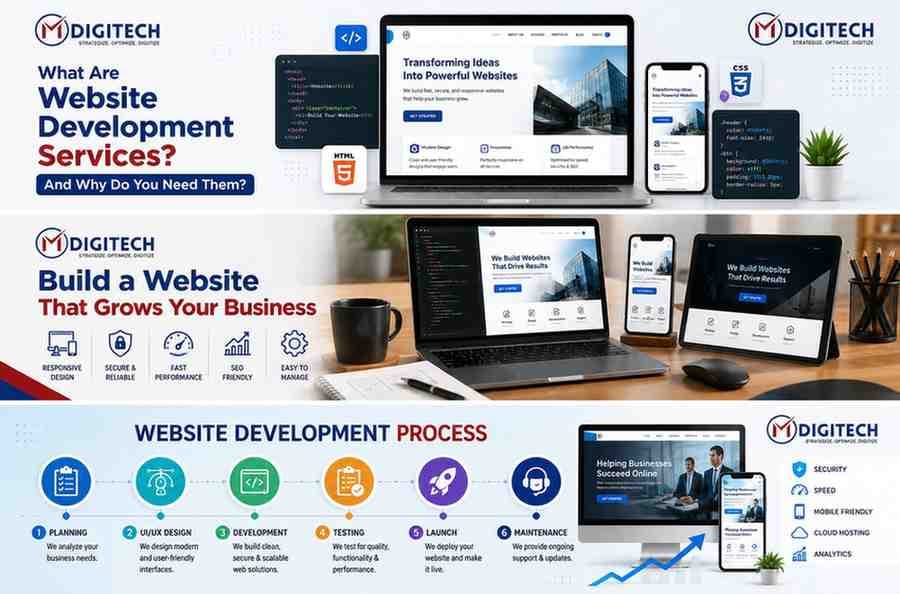
Website Development Services: Complete Guide for Businesses
A business website acts as the central hub for digital presence, brand communication, and customer engagement. Selecting the best website development service provider plays a crucial role in building a platform that not only looks impressive but also performs seamlessly across devices and user expectations.
A well-developed website aligns design, functionality, and performance with business objectives. It attracts visitors, builds trust, and converts traffic into measurable results without unnecessary complexity.
What Defines Website Development Services?
Website development services include everything required to create, maintain, and optimize a website. Developers focus on both front-end and back-end components to ensure a seamless experience.
These services generally include:
- UI/UX design implementation
- Front-end development using HTML, CSS, JavaScript
- Back-end development with server-side technologies
- Database management
- CMS integration
- Website security setup
- Performance optimization
A structured approach ensures that each element works together to deliver speed, usability, and scalability.
Why Do Businesses Invest in Website Development?
Businesses invest in website development to establish credibility, generate leads, and create a strong digital identity. A poorly designed website can damage brand perception and reduce conversion potential.
Key reasons include:
- Establishing a professional online presence
- Reaching a wider audience
- Improving customer engagement
- Generating consistent leads and sales
- Supporting marketing campaigns
A strong website functions as a 24/7 sales and communication channel.
How Does Website Development Impact Business Growth?
Website development directly influences how users interact with a brand. A fast, responsive, and intuitive website increases engagement and encourages users to take action.
Key growth impacts:
- Faster loading speeds reduce bounce rates
- Clear navigation improves user journey
- Mobile-friendly design captures more users
- Optimized structure supports search visibility
- Strong CTAs increase conversions
When development aligns with business goals, it creates measurable growth.
What Are the Core Types of Website Development?
Different business needs require different types of websites. Understanding these categories helps in choosing the right development approach.
Static Website Development — What Is It Used For?
Static websites display fixed content and suit small businesses or portfolios. They load quickly and require minimal resources.
Dynamic Website Development — How Does It Work?
Dynamic websites update content based on user interaction or database inputs. These are ideal for blogs, portals, and platforms requiring frequent updates.
E-commerce Development — What Makes It Unique?
E-commerce websites focus on selling products or services online. They include features like shopping carts, payment gateways, and product management systems.
CMS-Based Development — How Does It Simplify Management?
Content Management Systems allow users to update content without technical knowledge. Businesses prefer this for flexibility and ease of use.
Custom Web Development — When Should Businesses Choose It?
Custom development offers tailored solutions built from scratch. It suits businesses with specific requirements that standard platforms cannot fulfill.
How Does the Website Development Process Work?
A structured development process ensures efficiency and quality output.
Step 1: Requirement Analysis — What Needs to Be Defined?
Developers gather information about business goals, target audience, and required features.
Step 2: Planning and Wireframing — How Is Structure Designed?
Wireframes outline layout and functionality before actual development begins.
Step 3: Design Implementation — What Makes a Design Effective?
Design focuses on user experience, visual appeal, and brand consistency.
Step 4: Development Phase — How Is Functionality Built?
Developers code the front-end and back-end to bring the design to life.
Step 5: Testing and Quality Assurance — What Ensures Performance?
Testing identifies bugs, ensures compatibility, and improves usability.
Step 6: Deployment — Where Does the Website Go Live?
The website is launched on a server and becomes accessible to users.
Step 7: Maintenance — How Is Performance Sustained?
Regular updates and monitoring keep the website secure and efficient.
What Features Should a High-Performing Website Include?
A successful website must deliver both functionality and experience.
Essential features:
- Fast loading speed
- Mobile responsiveness
- Secure HTTPS connection
- Clear navigation structure
- Engaging visuals and content
- Strong call-to-action elements
- SEO-friendly architecture
These features enhance usability and improve overall performance.
How Important Is Mobile Responsiveness in Development?
Mobile responsiveness ensures that a website adapts to different screen sizes. A large portion of users access websites through smartphones.
Benefits include:
- Better user experience
- Higher search rankings
- Increased engagement
- Reduced bounce rates
Ignoring mobile optimization can lead to lost opportunities.
What Role Does UI/UX Play in Website Success?
UI (User Interface) and UX (User Experience) define how users interact with a website. A visually appealing design alone cannot guarantee success.
Effective UI/UX focuses on:
- Simplicity and clarity
- Easy navigation
- Consistent design elements
- Accessibility
A well-designed interface encourages users to stay longer and take action.
How Does Website Speed Affect Performance?
Website speed significantly impacts user experience and search rankings. Slow websites frustrate users and reduce engagement.
Ways to improve speed:
- Optimize images
- Minimize code
- Use caching techniques
- Choose reliable hosting
Faster websites retain users and improve conversions.
What Is the Role of SEO in Website Development?
SEO begins during the development phase, not after launch. Developers must build a structure that supports search visibility.
Important aspects include:
- Clean URL structure
- Proper heading hierarchy
- Optimized images
- Mobile-friendly design
- Fast loading speed
Integrating SEO into development ensures long-term visibility.
How Do Businesses Choose the Right Development Approach?
Choosing the right approach depends on business goals, budget, and scalability needs.
Consider these factors:
- Project complexity
- Required features
- Budget constraints
- Future expansion plans
- Integration needs
A strategic decision prevents costly changes later.
What Are Common Website Development Mistakes?
Mistakes in development can impact performance and user experience.
Common issues include:
- Ignoring mobile responsiveness
- Overloading with unnecessary features
- Poor navigation structure
- Lack of security measures
- Slow loading speed
Avoiding these mistakes improves overall effectiveness.
How Does Website Security Protect Business Data?
Security protects both business and user information. A secure website builds trust and prevents data breaches.
Key security measures:
- SSL certificates
- Regular updates
- Secure coding practices
- Firewall protection
- Data encryption
Strong security ensures reliability and user confidence.
What Are the Costs Involved in Website Development?
Website development costs vary depending on complexity and requirements.
Pricing factors include:
- Design complexity
- Number of pages
- Custom features
- Technology stack
- Maintenance requirements
Businesses should focus on value rather than just cost.
How Does Maintenance Support Long-Term Success?
Maintenance ensures that a website remains functional, secure, and updated.
Ongoing tasks include:
- Bug fixes
- Performance monitoring
- Content updates
- Security patches
Consistent maintenance prevents technical issues and downtime.
Where Does Website Development Fit in Digital Strategy?
Website development acts as the foundation for all digital marketing efforts. Without a strong website, other strategies lose effectiveness.
It supports:
- SEO campaigns
- Paid advertising
- Social media marketing
- Email campaigns
A well-developed website amplifies overall marketing performance.
How Can Businesses Measure Website Success?
Measuring success helps in refining strategies and improving results.
Key performance indicators:
- Traffic volume
- Bounce rate
- Conversion rate
- Average session duration
- Page load speed
Regular analysis ensures continuous improvement.
What Trends Are Shaping Website Development?
Website development continues to evolve with technology and user behavior.
Emerging trends include:
- AI-powered personalization
- Progressive web apps
- Voice search optimization
- Minimalist design approaches
- Advanced security features
Adapting to these trends helps businesses stay competitive.
Conclusion
Website development serves as a critical investment for long-term growth. A well-built website combines performance, design, and functionality to deliver measurable outcomes.
Businesses that prioritize user experience, scalability, and security create platforms that not only attract visitors but also convert them into loyal customers. A strategic approach to development ensures that the website remains relevant, efficient, and aligned with evolving business goals.