Full-Service Agency vs Freelancers: What Drives Better Results
Businesses face a critical decision when planning digital growth strategies. Many companies search for the best digital marketing agency while others consider hiring independent freelancers for flexibility and cost control. Both options offer value, but each operates differently and delivers results in distinct ways.
The choice depends on business goals, scale, budget, and required expertise. A clear comparison helps decision-makers avoid costly mistakes and build a strong marketing foundation.
Understanding the Two Approaches
A full-service agency provides a complete range of marketing services under one structure. Freelancers work independently and usually specialize in specific areas such as SEO, content writing, or paid ads.
Full-Service Agency
An agency brings a team of specialists who handle different aspects of digital marketing. It offers strategy, execution, and performance tracking under one system.
Freelancers
Freelancers operate individually and often focus on one or two skills. Businesses may hire multiple freelancers to cover different needs.
Both models can support growth, but they differ in coordination, scalability, and execution.
Key Differences at a Glance
- Agencies provide a team; freelancers work individually
- Agencies offer integrated services; freelancers focus on specific tasks
- Agencies follow structured processes; freelancers offer flexibility
- Agencies handle large-scale campaigns; freelancers suit smaller tasks
- Agencies require higher investment; freelancers often cost less
Understanding these differences helps align the choice with business objectives.
Expertise and Skill Depth
Skill depth plays a major role in marketing performance.
Agencies
Agencies bring specialists for each function:
- SEO experts
- Paid advertising managers
- Content strategists
- Designers and developers
- Data analysts
This structure ensures high-quality execution across all channels.
Freelancers
Freelancers usually specialize in one domain. A skilled freelancer can deliver strong results within that area.
However, businesses often need multiple freelancers to cover all marketing needs, which increases coordination effort.
Strategy and Planning
A strong strategy drives consistent results.
Agency Approach
Agencies focus on structured planning. They analyze business goals, audience behavior, and competitors before building campaigns.
They deliver:
- Integrated marketing strategies
- Long-term planning
- Data-driven decision-making
Freelancer Approach
Freelancers often focus on execution rather than strategy. Some experienced freelancers offer strategic insights, but not all provide a complete roadmap.
Businesses may need to manage strategy internally when working with freelancers.
Communication and Coordination
Communication impacts efficiency and outcomes.
Agencies
Agencies provide account managers or dedicated points of contact. They handle internal coordination, which simplifies communication for clients.
Freelancers
Working with multiple freelancers requires managing different individuals. This can lead to:
- Communication gaps
- Delays in execution
- Misaligned strategies
Strong coordination becomes essential when using freelancers.
Cost Comparison
Cost often influences the decision significantly.
Agencies
Agencies typically charge higher fees due to team involvement, tools, and structured processes.
However, the cost includes:
- Multiple specialists
- Advanced tools
- Strategic planning
- Ongoing optimization
Freelancers
Freelancers usually offer lower rates. This makes them attractive for small businesses or limited budgets.
However, hiring multiple freelancers can increase total costs and complexity.
Scalability and Growth
Growth requires scalable marketing systems.
Agencies
Agencies scale campaigns efficiently. They can increase efforts across channels without major disruptions.
They support:
- Expansion into new markets
- Increased campaign budgets
- Advanced marketing strategies
Freelancers
Freelancers may face limitations when scaling. One individual can handle only a certain workload.
Businesses may need to hire additional freelancers, which complicates management.
Tools and Technology Access
Modern marketing depends on advanced tools.
Agencies
Agencies invest in premium tools for:
- SEO analysis
- Campaign tracking
- Automation
- Data reporting
These tools improve accuracy and efficiency.
Freelancers
Freelancers may use basic or limited tools, depending on their resources.
This can affect performance tracking and optimization.
Consistency and Reliability
Consistency ensures stable results over time.
Agencies
Agencies follow structured processes and timelines. They maintain consistency across campaigns and channels.
If one team member becomes unavailable, another can continue the work.
Freelancers
Freelancers rely on individual availability. Delays can occur due to workload, personal commitments, or unforeseen issues.
Consistency may vary depending on the freelancer’s schedule.
Flexibility and Customization
Flexibility matters for businesses with changing needs.
Agencies
Agencies offer structured services with defined processes. While they provide customization, changes may require formal adjustments.
Freelancers
Freelancers offer high flexibility. Businesses can quickly adjust tasks, timelines, and scope.
This flexibility suits short-term or experimental projects.
Quality Control and Accountability
Quality determines campaign success.
Agencies
Agencies maintain quality through internal reviews and standardized processes. They ensure consistency across deliverables.
They also provide accountability through contracts and reporting systems.
Freelancers
Quality depends on individual expertise. A skilled freelancer can deliver excellent work, but consistency varies.
Accountability may be limited compared to structured agency systems.
Project Complexity Handling
Complex campaigns require coordination across multiple channels.
Agencies
Agencies excel in handling complex projects. They integrate multiple services into a single strategy.
Freelancers
Freelancers may struggle with complex projects unless businesses manage coordination effectively.
Multiple freelancers working independently can create inconsistencies.
Long-Term vs Short-Term Needs
Business goals influence the choice between agencies and freelancers.
Agencies for Long-Term Growth
- Continuous strategy development
- Ongoing optimization
- Scalable campaigns
Freelancers for Short-Term Tasks
- Specific project execution
- Limited campaigns
- Budget-friendly solutions
Matching the model with business goals ensures better results.
When to Choose a Full-Service Agency
Choose an agency if you need:
- A complete marketing strategy
- Multi-channel campaign execution
- Long-term growth support
- Scalable solutions
- Consistent performance tracking
Agencies work best for businesses aiming for sustained growth.
When to Choose Freelancers
Choose freelancers if you need:
- Specific skills for short-term projects
- Cost-effective solutions
- Flexible working arrangements
- Quick execution of individual tasks
Freelancers suit startups and small businesses with limited budgets.
Common Mistakes Businesses Make
Businesses often make errors while choosing between agencies and freelancers.
Mistakes to Avoid
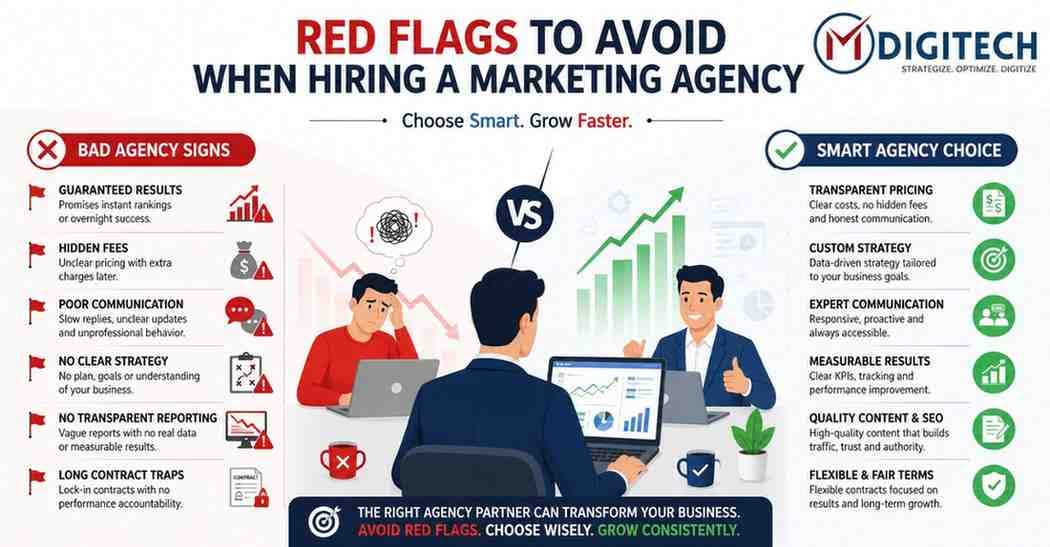
- Choosing based only on cost
- Ignoring long-term goals
- Underestimating coordination efforts
- Expecting instant results
A balanced evaluation prevents poor decisions.
Hybrid Approach: Combining Both Options
Some businesses benefit from combining agencies and freelancers.
Example Approach
- Use an agency for strategy and core campaigns
- Hire freelancers for additional content or design work
This model provides flexibility while maintaining structure.
Decision-Making Framework
Use this framework to decide:
- Define your marketing goals
- Evaluate budget limitations
- Assess internal resources
- Determine required expertise
- Consider long-term growth plans
A structured decision ensures alignment with business needs.
Conclusion
The choice between a full-service agency and freelancers depends on business priorities. Agencies provide structure, scalability, and integrated strategies. Freelancers offer flexibility, affordability, and specialized skills.
Businesses aiming for long-term growth often benefit from a full-service approach. Those with limited needs or budgets may find freelancers more suitable.
The right decision comes from aligning resources, goals, and expectations. A clear strategy ensures that whichever option you choose contributes to measurable and sustainable growth.